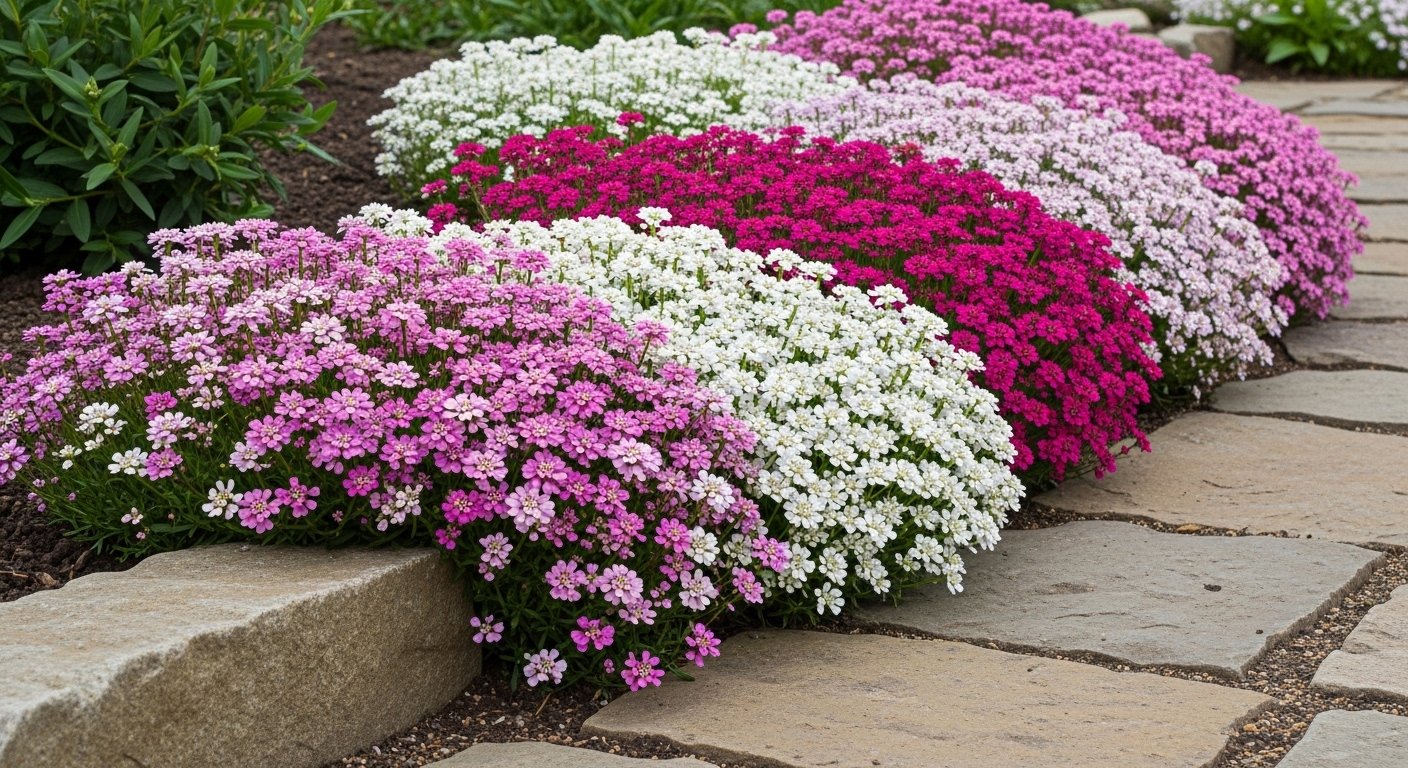
Candytuft tends to steal attention in gardens – its blanket of white or pink blooms stands out each year. Found growing low, it fits well beside stones or along pathways where care runs minimal. After taking root, these resilient ones need almost nothing, just space to stay. Pick up a couple basic hints, and their show will last longer without fuss.
Pick A Sunny Spot
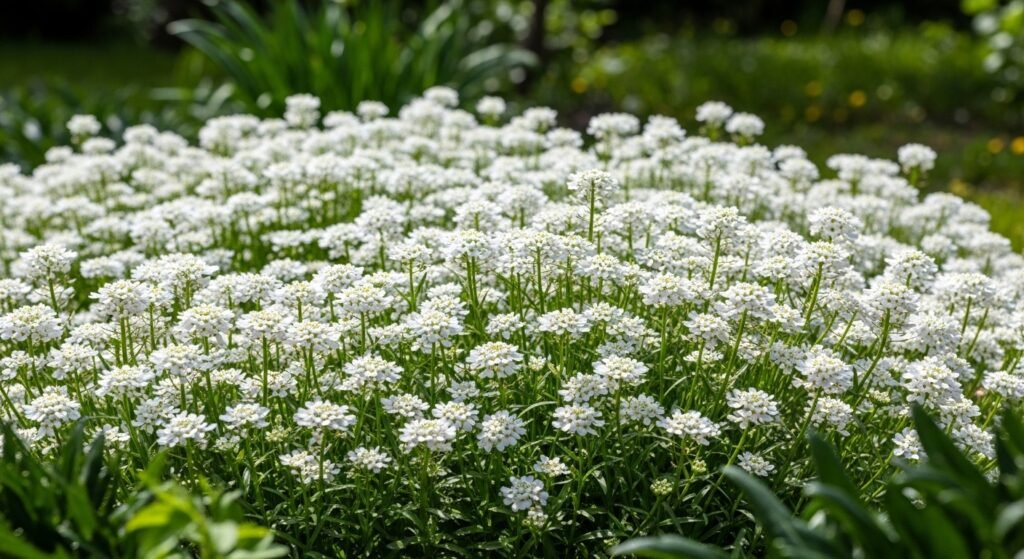
Sunshine fuels these plants – they thrive when bright light hits them for half a day or more. Place them where shadows last too long, they could stretch thin, flowers scattered instead of full.
Check Your Soil Drainage

Candytuft needs a dry home to thrive. You must check that your soil drains well so water does not pool. These plants suffer in constant moisture. If your ground feels heavy or sticky, add some compost. This simple step keeps the roots from drowning in the dirt.
Plant At The Right Time

When it comes to putting things in the ground, many choose spring’s quiet start or autumn’s slow fade – each allows root growth space away from summer’s fierce warmth. Strength builds in quietly under those seasons, allowing new life to settle into its place before storms arrive again.
Space Them Out Properly

Leaving just under a foot between every plant allows space for spreading during growth. Air moves more freely this way, reducing chances of mold or rot where moist leaves press against one another.
Water Carefully At First

Newly planted flowers need a steady drink to help them grow. You want the soil to be soft and damp for a while. Once they are established they become very strong. You can stop worrying about them so much during the hot summer months.
Use The Right Fertilizer

Fertilizer once a season helps them grow, especially by late March or early April. A single sprinkle of well-rounded garden mix each growing season tends to hold foliage in good condition.
Prune After Flowering

Right after the blooms vanish near the end of spring, trim off the upper inch of new growth. Doing so stops woodiness from taking hold while boosting density and fullness for future seasons.
Watch For Pests

Watch for tiny pests such as aphids feeding on young plant parts when seasons shift. A quick rinse from a hose might clear them out without fuss. When infestations grow more serious, trying a diluted soap solution could help instead.
Mulch For Winter Protection

When it gets chilly, a thin spread of mulch near the base keeps roots safer during frost and melt. Just keep that layer back from the stem – moisture matters.
Propagation Through Cuttings

When summer comes, you might notice plants grow extra fast. Instead of buying new ones, try snapping off tiny stems from healthy ones nearby. Place those into a bucket or container where they can start their own roots. This method gives you extra green friends without asking for cash. Ends up saving cash while adding life to your outdoor space.
Related Posts